A truck misses its pickup appointment at the rail ramp, and the container sits another day racking up storage charges. By the time it reaches the plant, the production run it was supposed to feed has been pushed back, and the invoice shows fees nobody mentioned in the quote.
That truck leg is drayage: the haul between a port or rail ramp and the plant or warehouse at each end of an intermodal move. It's the shortest leg of the trip, and for industrial shippers adding intermodal or transload to a rail network, it's often the one that decides whether the strategy pays off.
This guide defines drayage, walks through the main types, explains how it fits into rail and ocean moves, breaks down what it costs, and shows how a multimodal TMS closes the coordination gaps that make it expensive and unpredictable.
What Is Drayage?
Drayage is the short-haul trucking move, and the fee charged for it, that connects a port, rail ramp, or terminal to a nearby warehouse, distribution center, or plant. Merriam-Webster captures both meanings: "the work or cost of hauling by dray."
The term traces back to the dray, a low, horse-drawn cart used to haul freight short distances before trucks existed. Trucks replaced horses, and horsepower means something entirely different now, but the job remains: getting freight from point A to point B.
How far does a drayage move go? Most run under 100 miles, though some carriers stretch the definition to 300. Midwest AWD, a Wisconsin 3PL, says drayage often stays within 50 miles of a port or terminal; InTek puts most moves under 100 miles; and Trinity Logistics says usually less than 100 to 200.
The range varies because drayage is defined by function, not a fixed radius. It's the short connector leg of a move, and "short" stretches further for a rail ramp serving a rural industrial plant than it does for a port move in a dense metro. No regulator sets the radius, either. California's Advanced Clean Fleets regulation defines drayage trucks by where they operate (seaports and intermodal railyards), rather than how far they travel.
What's the Difference Between Drayage and Intermodal Transportation?
Drayage and intermodal transportation are often used interchangeably, but they aren't the same.
Intermodal transportation is the entire journey. Freight moves across two or more modes in the same container or trailer, without being unloaded and reloaded along the way.
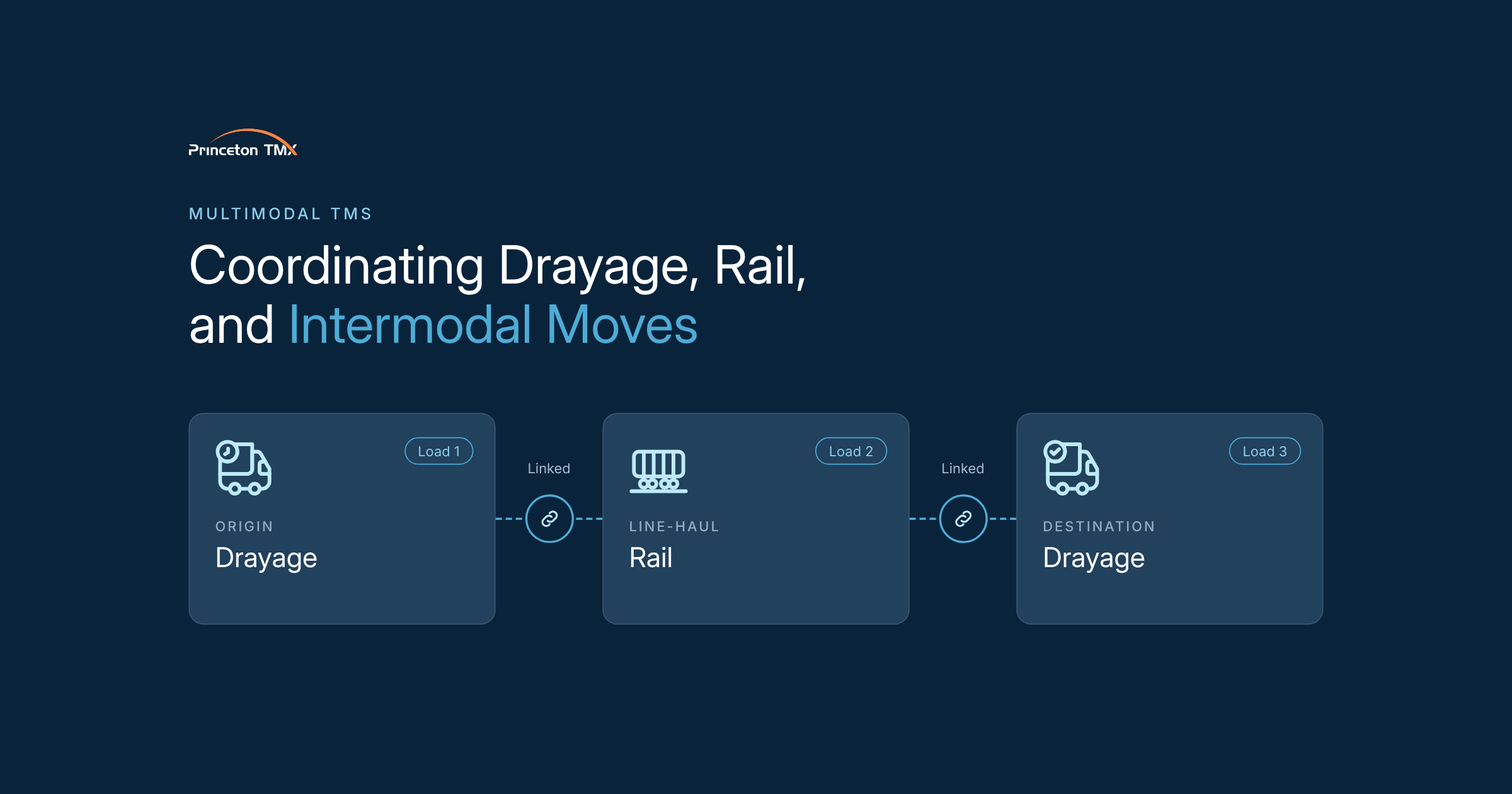
Typical moves have up to three legs:
- Step 1: A drayage truck picks up the loaded container at the origin facility and carries it to a port or rail ramp.
- Step 2: The container covers the long-haul portion by ocean vessel or rail.
- Step 3: Another drayage truck picks up the container at the destination port or ramp and delivers it to a warehouse, distribution center, or plant.
Drayage covers the truck legs at either end; intermodal is the whole trip.
On an ocean import, a shipper may only deal with Step 3, which is why drayage often gets described as a last-mile service. In contrast, on a domestic rail intermodal move, a shipper usually deals with both first- and last-mile drayage.
The legs are managed differently, too. The rail or ocean leg is scheduled, tracked, and relatively predictable over long distances. Drayage legs are less visible and less predictable because they depend on chassis availability, appointment windows, and carrier relationships that often sit entirely outside a shipper's core transportation systems.
How Does Drayage Fit Into a Multimodal Freight Network?
Plenty of industrial shippers never touch a seaport. For them, the drayage handoff happens at an inland rail ramp or transload facility. But not every rail shipment gets drayed. A plant with its own rail siding often loads carload freight directly into boxcars, gondolas, or hoppers, with no truck involved.
Drayage enters an industrial network in two ways.
- Intermodal, where rail freight such as paper, lumber, or some steel products rides in a container or trailer on a railcar, and trucks handle the ramp at each end.
- Transload, for shippers without a rail siding: trucks bring product to a facility that moves it into railcars or barges, and back out again at the other end.
Inland drayage is often shorter than port runs, but the coordination risk is the same. Rail or barge may carry the miles, yet a missed ramp appointment or a chassis shortage can strand a shipment inland just as easily as on the coast. When either end breaks, the whole plan does, and so do the savings that made intermodal optimization worth pursuing.
What Are the Different Types of Drayage?
Drayage moves fall into a handful of types, and each one affects what you pay, who schedules it, and where delays tend to start.
Port/Pier Drayage
The most common type, and the one most drayage content defaults to: moving a container from a marine terminal to a nearby warehouse, rail ramp, or distribution center. This is the classic ocean-import scenario, and it's where most of the fee complexity tends to concentrate, since the container leaves port property with a clock already running.
Inter-Carrier Drayage
Moving a container between two different carriers' terminals, typically within the same city, so that a shipment can transfer from one rail line or ocean carrier to another. For an industrial shipper, this shows up when a rail move requires a handoff between Class I railroads at a shared hub. Chicago is the classic example, where freight crossing the country often crosses town by truck between railroads.
Intra-Carrier Drayage
The same movement, but between two terminals operated by the same carrier. For example, shifting a container between two yards owned by one railroad to route it to the right outbound train. It's less common than inter-carrier moves, but it still uses an appointment slot and a chassis, which makes it easy to miss when tracing a late shipment back to its cause.
Expedited Drayage
A premium, time-sensitive move used when a standard drayage schedule won't get freight where it needs to be in time, such as a production line waiting on a steel coil or a plant facing a raw-material stockout. It costs more, but it exists specifically to absorb the kind of delay a normal drayage appointment can't.
Shuttle Drayage
Short-distance repositioning of a container or chassis between two points that aren't the final destination, often used when a terminal is at capacity and freight needs to go to an overflow yard temporarily. It's an operational necessity rather than a customer-facing service, but it still adds a leg, and every added leg is another point where a delay can start.
Door-to-Door Drayage
Both drayage legs are arranged as a single service alongside the long haul, so one provider owns the move from the shipper's dock to the receiver's. The two handoffs still happen. The difference is that one provider books and bills both.
Many shippers use more than one of these in a single lane, which is why it pays to know which one you're being billed for.
How Much Does Drayage Cost, and What Fees Should I Expect?
A drayage quote usually shows one number: a base rate, priced per container by distance and market. The real cost shows up in the accessorials layered on top, often after the fact.
The fees that catch shippers off guard tend to cluster around a few recurring culprits:
- Congestion charges: Added when a port or rail ramp is dealing with high volume or limited appointment availability, and passed through to the shipper whether or not the delay was avoidable.
- Yard-pull fees: Charged for retrieving a container from a terminal or rail yard, separate from the cost of the haul itself.
- Chassis fees: A daily or per-move charge for the chassis the container rides on. When chassis are scarce at a terminal, both the delay and the cost land on the shipper.
- Fuel surcharges: An add-on to the base rate that rises and falls with diesel prices, which makes it hard to budget more than a few weeks out.
- Demurrage: Charged by the port or terminal when a container sits past its free time before drayage picks it up. At rail ramps, this is often billed as storage. It's a terminal-side charge, separate from anything the trucking carrier bills, and it's where dwell time starts costing real money.
- Detention: Charged when drayage equipment (the truck, the chassis, or both) is held past its allotted free time, typically because the receiving facility wasn't ready to unload. Unlike demurrage, this is usually within the shipper's control. It pays to focus on reducing detention charges proactively rather than treating them as a cost of doing business.
Each fee is defensible on its own. But together, they can double the cost of a dray, and most shippers don't see the total until the invoice arrives.
How Does a TMS Coordinate Drayage, Rail, and Intermodal Moves?
Drayage usually sits with a local carrier, tracked separately from the rest of the intermodal shipment (if it's tracked at all) so problems tend to go unnoticed until they cost money.
A multimodal TMS fixes that by connecting the drayage legs to the rail or ocean move instead of leaving them as disconnected local errands. In Princeton TMX, the origin dray, the rail leg, and the destination dray are each their own transaction, managed with the carrier and mode details each one needs. They all reference each other, so anyone working one leg can see where the freight came from and where it goes next.Exception Management sends alerts when a transfer slips, so a missed pickup or delivery appointment comes up while there's still time to fix it, not when storage or detention charges hit the invoice. You can follow the freight from the origin plant to the rail ramp to final delivery, and drayage performance feeds the same intermodal conversion metrics you already use to judge whether intermodal is paying off.
The shippers who feel this most are industrial companies running rail and intermodal freight, who already deal with inbound freight visibility gaps on the rail leg. Drayage creates the same blind spot at both ends of the move.
The shippers who feel this most are industrial companies running rail and intermodal freight, who already deal with inbound freight visibility gaps on the rail leg. Drayage adds the same blind spot at both ends of the move.
What Should I Look for in Drayage Services and a Multimodal Coordination Partner?
When you evaluate drayage services, look at appointment reliability, chassis availability at the ramps or ports you use, coverage in your specific lanes, and how well the provider integrates with your existing TMS. Those fundamentals matter regardless of what system you're running.
Having a good provider is half the equation, but it needs to be followed by a practical question: can your TMS see what that provider is doing? A TMS that integrates all modes of transportation turns drayage from a blind spot into a tracked, accountable leg of the shipment, before the fees above start stacking up.
Princeton TMX connects intermodal, rail, and barge in a single coordination layer, drayage included. If detention fees, missed appointments, and disconnected drayage carriers are costing you money, request a demo to see how a multimodal TMS closes that gap.
What is Drayage Frequently Asked Questions
Drayage is the short-haul trucking leg that connects a port, rail ramp, or terminal to a nearby warehouse, distribution center, or plant. The term also refers to the fee charged for that leg.
Intermodal transportation is the full shipment journey across multiple modes: ocean, rail, and truck. Drayage is the short local trucking at the beginning and/or end of that journey.
Most drayage moves run under 100 miles, though some carriers define drayage as far as 300 miles. The distance depends on function rather than a fixed radius. A rail ramp serving a rural plant often means a longer dray than a port move in a dense metro.
Freight is the goods being shipped across any distance or mode. Drayage is one specific piece of moving it: the short truck trip to or from a port or rail terminal.
Drayage is the trucking move itself. Demurrage is a separate charge from the port or terminal incurred when a container sits past its free time before drayage picks it up.
A drayage charge is the fee billed for the short-haul trucking leg of a move. It can include the base rate plus accessorials like chassis fees, congestion charges, and fuel surcharges.
OTR trucking hauls freight long distances, point to point, with the truck as the only mode. Drayage is short and local, and almost always one leg of a longer rail or ocean move.
Missed appointment windows, chassis shortages, and terminal congestion are the most common causes. Detention charges specifically occur when equipment is held past its free time, often because a receiving facility wasn't ready to unload.