

Rail TMS Software: Unify Railcar Management, ASNs & Rail Freight
Rail moves the freight that keeps a customer running, and it is the mode most likely to leave you guessing. Princeton TMX automates the waybill, tracks every car from origin to release, helps manage what is in the yard, and turns dwell and demurrage from a monthly surprise into a number you can defend.
Why leading shippers choose Princeton TMX
Drive sustainable growth and long-term efficiency through a fully connected rail freight operation

Recover Demurrage Spend
We timestamp every placement, release, and pull event as it happens. When the railroad’s bill arrives, you’re comparing it to your own record, not negotiating from memory.

See Inbound Days Earlier
Rail ASN creates the inbound shipment from your supplier’s notice, before the railroad reports status. Planners get days of lead time instead of 24 to 72 hours.

Audit Every Railroad Invoice
We rate each shipment against your own contracts and tariffs, then check the railroad’s invoice against it. Variances get flagged; the rest approves itself.

End the Tribal Knowledge Problem
Rail Patterns encodes the full waybill by lane: route, stations, commodity, equipment, parties. A new coordinator produces what your fifteen-year veteran produces.
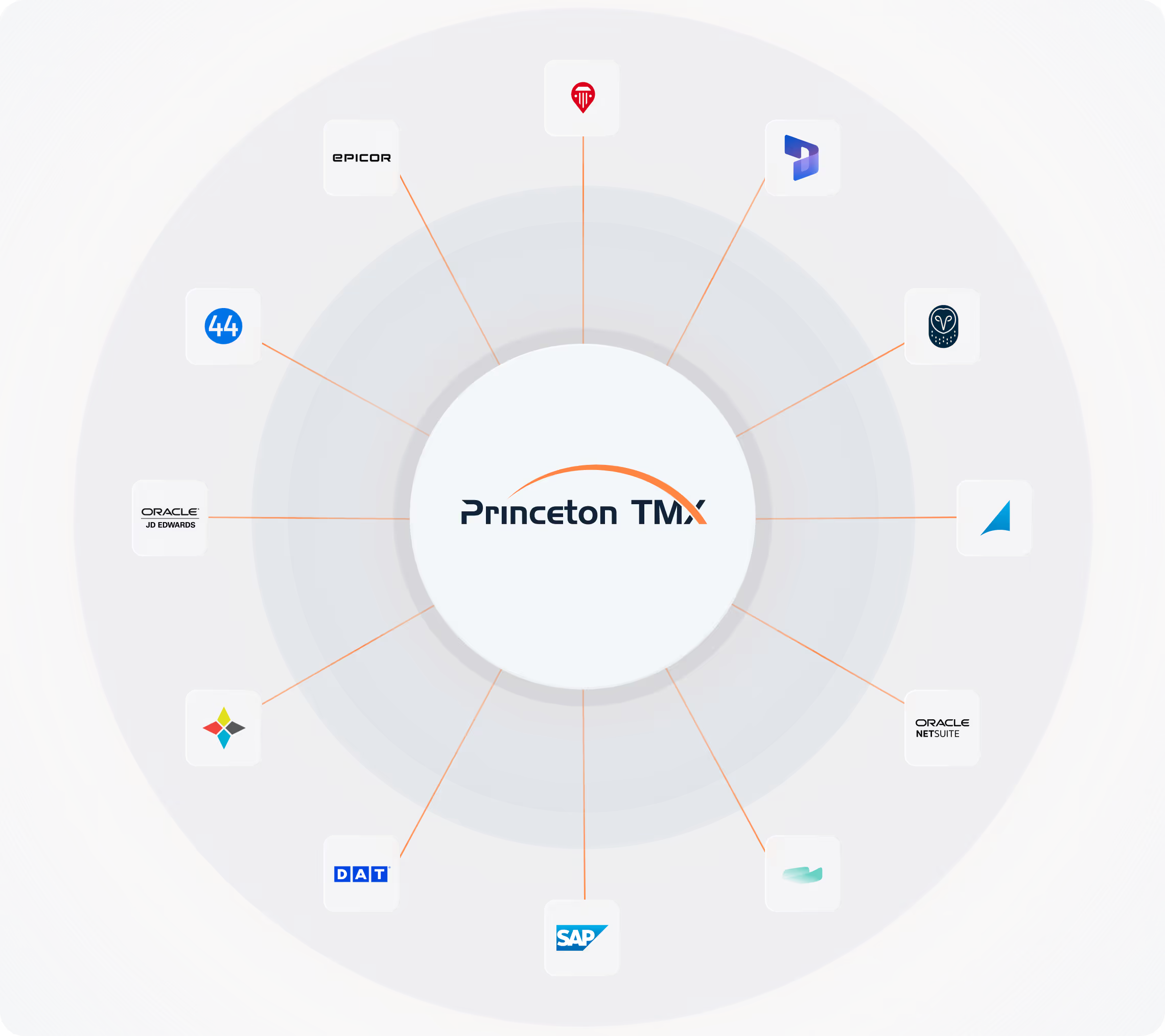
One platform for all your tech
Princeton TMX connects your shipments, across every system, location, and business unit, empowering your team to build a fully integrated network.
Your rail freight challenges, solved.
Purpose-built for rail freight
Rail shipping is one of the most efficient and sustainable modes of freight transport, but also, one of the most complex. Unlike truckload shipments, rail moves require a dense matrix of operational details before a single load can move. Princeton TMX replaces that complexity with two purpose-built capabilities.

Rail Patterns
Rail Patterns capture how a lane actually moves and apply it to every shipment on it. Your team supplies the basics and the pattern supplies the rest. The route, origin and destination station, STCC and packaging codes, weight, method of payment, car type and ownership, seals, reference numbers, the full party block, and special instructions.
The point is not keystrokes saved. It is that a new coordinator on their second week produces the same waybill as the person who has run that lane for fifteen years, and the railroad accepts it the first time. For shippers moving into or out of Mexico, patterns carry the Carta Porte data the move requires, so cross-border rail doesn’t become a separate manual process.

Rail ASN (Advance Shipment Notification)
Rail ASN takes advance shipment notifications from your suppliers by EDI or API and creates the inbound shipment before the railroad has anything to say about it, matching it to the live shipment as railroad data arrives. Instead of 24 to 72 hours of notice, your planners get days.
That changes what the planning conversation is about. Production, labor, and dock scheduling stop being reactions to arrivals and start being decisions made against known inbound supply.

Track and Trace
Princeton TMX ingests car location messages and maintains a live position and event history for every car: where it was last sighted, when, by which carrier, and what happened. Cars you own or lease stay synchronized with your Railinc feet, so the system’s view and the industry’s view do not drift apart.
Equipment sits in one module whether it is a private car, a system car, or a car you have no visibility into on a truckload move, which is the part shippers running multiple modes actually care about.

Demurrage
Princeton TMX tracks the demurrage clock at the event level: notified, ordered, constructive placement, actual placement, released, pulled. Each with its own timestamp and time zone, and accrues charges against the demurrage rate on your contract at that location. Two things to follow. Your team sees which cars are accruing while they can still do something about it. And when the railroad’s bill shows up, you are not negotiating from memory, you are comparing their number to your own timestamped record.
Rail Rating and Freight Audit
Princeton TMX rates every rail shipment against your own contracts and tariffs, then checks the railroad’s invoice against that number.
Rating handles what rail actually requires: rates by carload, ton, or cubic foot; fuel surcharge on its own basis; accessorials; tariff authority, Rule 11 moves split between carriers; and different pricing for private, system, and foreign cars. Rates apply as of the date that governs the move, and shipments re-rate automatically when routing changes.
When the railroad’s invoice arrives, it is matched to the shipment and compared against the calculated rate. Inside tolerance it approves automatically. Outside it, it stops for a person, with the variance already identified. Finance gets an auditable record of every charge instead of a stack of invoices nobody has time to check.
Exceptions
Not every car needs attention; the ones that do, need it early. Princeton TMX surfaces them in work queues built for rail: cars with no location update, cars in bad order, cars accruing excessive demurrage, and shipments held up by data problems.
Each queue carries what you need to act. Last sighting and carrier, dwell hours, destination ETA, placement date, commodity, and BOL; so the work is triage, not investigation.
All Signals.
No Noise.
Leverage analytics, reporting, and real-time insights to guide every decision. Our data-driven approach helps you cut costs, improve performance, and stay ahead of the next disruption.

Real shippers. Real results.
Learn how industry leading shippers are reducing costs, improving visibility, and gaining control of their freight with Princeton TMX's Unified Transportation Management System



Unify your freight across modes
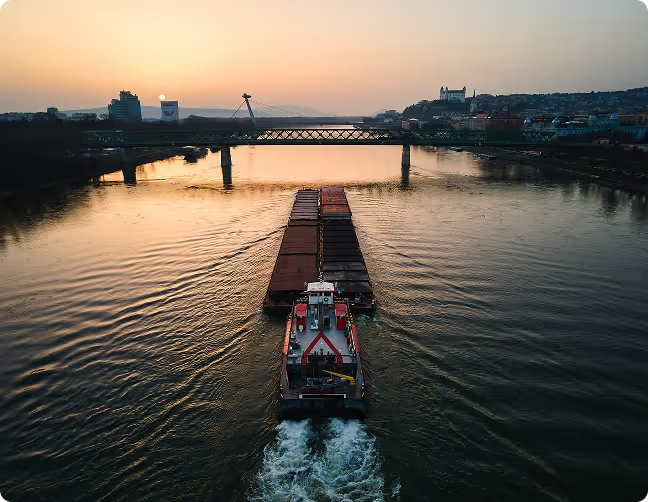
Barge
Move more for less; simplify barge coordination and amplify sustainability with real-time visibility and control.
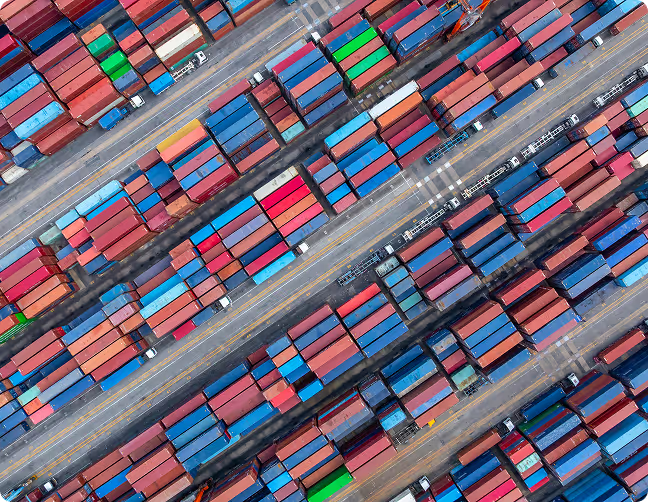
Intermodal
Connect every mode into one intelligent network; accelerate performance from drayage to delivery.

Fleet
Maximize fleet performance; automate planning, dispatch, and management through one unified platform.

Truck
Keep freight moving with precision and speed; unify every load, lane, and carrier through AI-accelerated truck management.
Rail TMS Frequently Asked Questions
A rail TMS is transportation management software built specifically for rail freight. Creating and transmitting waybills, routing shipments across interline carriers, tracking cars through the network, rating and auditing rail invoices, and managing dwell and demurrage. It differs from a general TMS in that it models rail’s own data: station and SPLC codes, STCC commodities, car ownership, and placement events. Princeton TMX is a rail TMS that also runs truck, barge, intermodal, and private fleet in the same platform.
Yes. Princeton TMX ingests car location messages from Railinc along with railroad status updates, and maintains current position and full event history for every car, including last sighting location, timestamp, reporting carrier, and event. Cars you own or lease stay synchronized with your Railinc fleet. Rail equipment sits in the same module as your other equipment, so one view covers the network.
Railcar management software helps shippers track, plan, and optimize rail freight, including routing, dwell time, demurrage, and invoice validation, in one platform built specifically for the complexity of rail operations.
Rail ASN, or Advance Shipment Notification, is a message a supplier send by EDI or API to tell a shipper a rail shipment is coming before the railroad reports it. Princeton TMX creates the inbound shipment from the ASN and matches it to the live shipment as railroad data arrives. Where railroad notice typically gives 24 to 72 hours, an ASN gives planners days, enough to plan production, labor, and dock space around known inbound supply.
A general TMS models a shipment as a load with a carrier, an origin, and a destination. Rail needs more: station and SPLC codes, STCC commodity codes, interline routes with junctions and service codes, private versus system versus foreign car ownership, and placement events that drive demurrage. A general TMS with a rail module usually handles the tender and leaves tracking, demurrage, and invoice audit to spreadsheets. Princeton TMX handles all of it and runs truck, barge, intermodal, and fleet alongside.
Yes. Princeton TMX unifies truck, rail, barge, intermodal, and private fleet in one system on one set of data. For industrial shippers, that is what makes modal shift practical: comparing real cost and transit across modes in the same place, rather than reconciling separate systems after the fact.
Shippers track demurrage by capturing the events that start and stop the clock: notified, ordered, constructive placement, actual placement, release, and pull, and then applying the demurrage rate from their contract for that location. Princeton TMX records each event with its timestamp and time zone and accrues the charge as it builds, accounting for loaded versus empty and hazardous versus non-hazardous commodities. Teams see accruing cars while they can still act, and hold a timestamped record when the railroad’s invoice arrives.
Yes. Princeton TMX rates every rail shipment against your own contracts and tariffs, then matches the railroad’s invoice to the shipment and compares it against that calculated rate. Rating covers per-carload, per-ton, and per-cubic-foot bases, fuel surcharge on its own basis, accessorials, tariff authority, Rule 11 moves split between carriers, and different pricing by car ownership. Invoices inside tolerance approve automatically; those outside stop for review with the variance identified.
Yes. Rule 11 moves, where each carrier bills its own portion separately rather than moving under a single through rate, are rated per carrier segment and settled against the appropriate rate for each. This matters for shippers using Rule 11 to control interline pricing, and it is a common gap in general-purpose systems that assume one rate per shipment.
Princeton TMX is built for industrial shippers moving heavy, high-volume freight such as steel, lumber and building products, chemicals, pulp and paper, food and agriculture, and packaging. These are shippers with real rail volume, private or leased car fleets, plant and mill origins, and demurrage exposure, for whom rail is a core mode rather than an occasional alternative.
Yes. Cross-border rail into and out of Mexico requires Carta Porte data on the shipment, and Princeton TMX carries that data at the lane level so it is applied automatically rather than assembled by hand for each move. Cross-border rail stays in the same workflow as domestic rail instead of becoming a separate manual process.