

Transportation Spend Management Software: Control Lane & Freight Costs with AI
Gain a unified, data-driven view of lane performance and transportation spend management, helping you reduce costs, improve service, and make smarter decisions across your network.
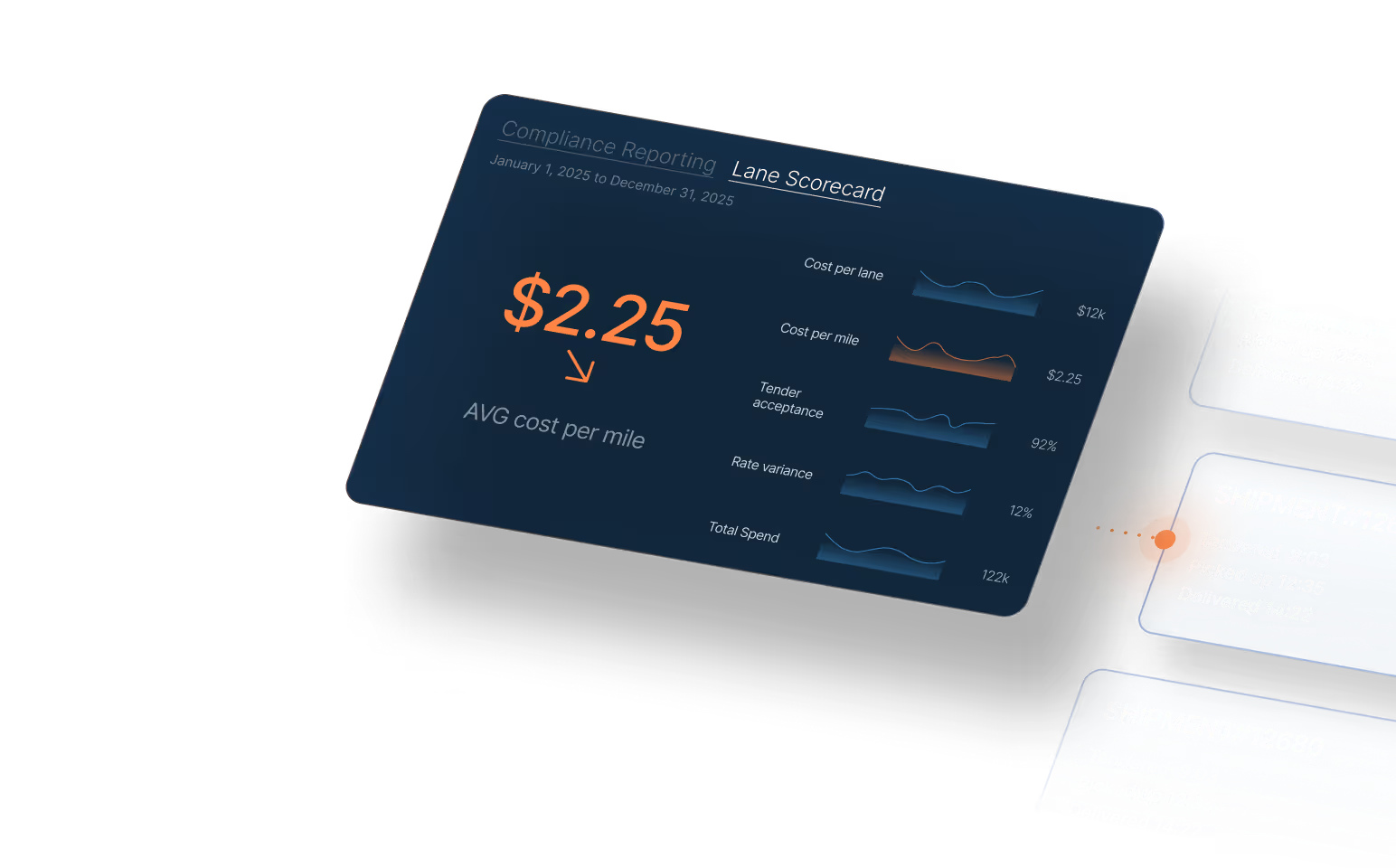
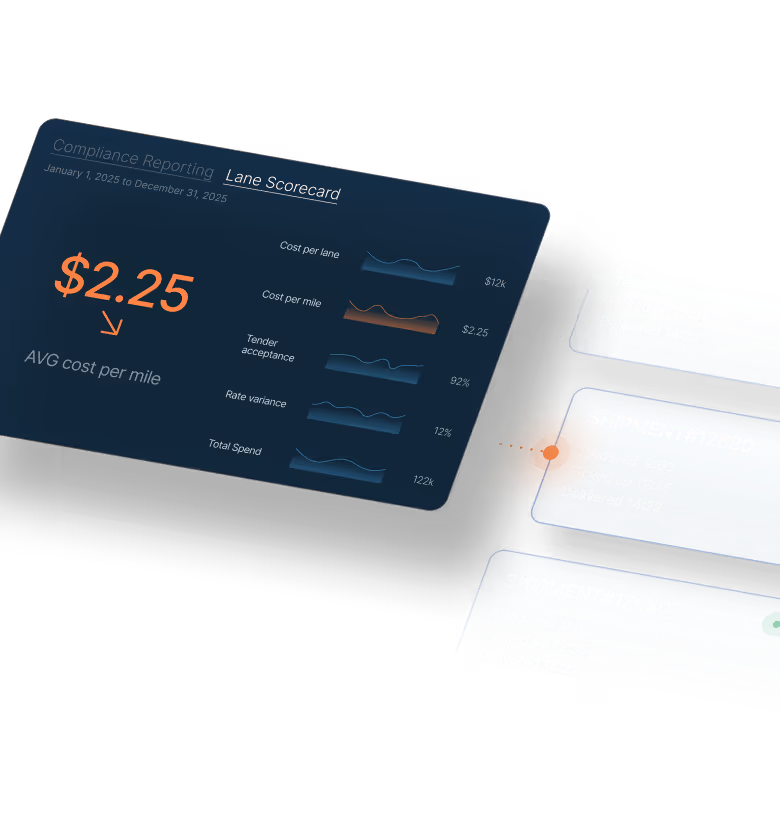
Create transparency and trust with your transportation leaders


Unlock real-time lane insights
Measure cost, service, and operational health across every lane
- Track on-time performance, dwell time, and service failures — identify your strongest and weakest lanes instantly
- Compare carriers within the same lane — understand who’s performing, who’s struggling, and where opportunities exist
- Monitor trends over time — surface recurring issues tied to seasonality, volume shifts, or network constraints

Track how every dollar moves through your network
Build confidence in your transportation cost management with automated consolidation and normalization
- Centralize costs across modes, carriers, and locations — eliminate fragmented spreadsheets and disconnected tools
- Drill into spend by lane, region, carrier, or customer — uncover patterns that inform strategic sourcing and budgeting
- Spot anomalies and overspending — detect cost variances caused by accessorials, re-routes, or non-compliant charges
- Pair this with freight audit to catch and dispute those charges before they’re ever paid

Plan budgets with confidence
Give finance and operations teams the real-time visibility they need to control costs and plan effectively
- Spend vs. budget analysis — monitor actual vs. planned costs to understand where overruns or efficiencies are occurring
- Forecast cost variance — use historical patterns and real-time trends to anticipate rate changes, capacity constraints, and accessorials
- No surprises — equip teams with transparent insights, enabling smarter decisions, better alignment with finance, and fewer surprises

Turn insights into improvements
Use powerful insights to refine routing guides, optimize load plans, and drive logistics cost reduction
- Identify high-cost, low-performance lanes — and uncover alternatives that improve reliability or reduce cost
- Detect consolidation and mode-shift opportunities — improve utilization and reduce empty miles across your network
- Enable strategic decision-making — support procurement, operations, and finance with a single source of truth



What Is Transportation Spend Management?
Transportation spend management is the practice of tracking, analyzing, and controlling every dollar spent moving freight, across carriers, modes, and lanes. It gives transportation and finance teams a single source of truth for cost data, so decisions are based on real numbers instead of scattered spreadsheets.
One platform for all your tech

Unify Workflows
All modules, data points, and teams work together to eliminate silos and minimize disruptions.

Real-Time Data
Every shipment update flows instantly across teams, carriers, and partners.

End-to-End Visibility
From planning to analytics, the entire shipment lifecycle stays connected.

Scale Operations
Configurable infrastructure allows you to operate across teams, locations, and modes without adding complexity.
Trusted by leading shippers


"Load tendering, which previously involved manual emails and data entry, now operates with minimal human intervention"


"They're helping make our supply chain more strategic and data-driven. We have folks across our business asking to see the data that our TMS is showing us—it's that valuable across our entire organization."


"Today, we have clear, real-time control over deliveries because of Princeton TMX."
Real shippers. Real results.
Learn how industry leading shippers are reducing costs, improving visibility, and gaining control of their freight with Princeton TMX's Unified Transportation Management System



Discover more solutions from Princeton TMX
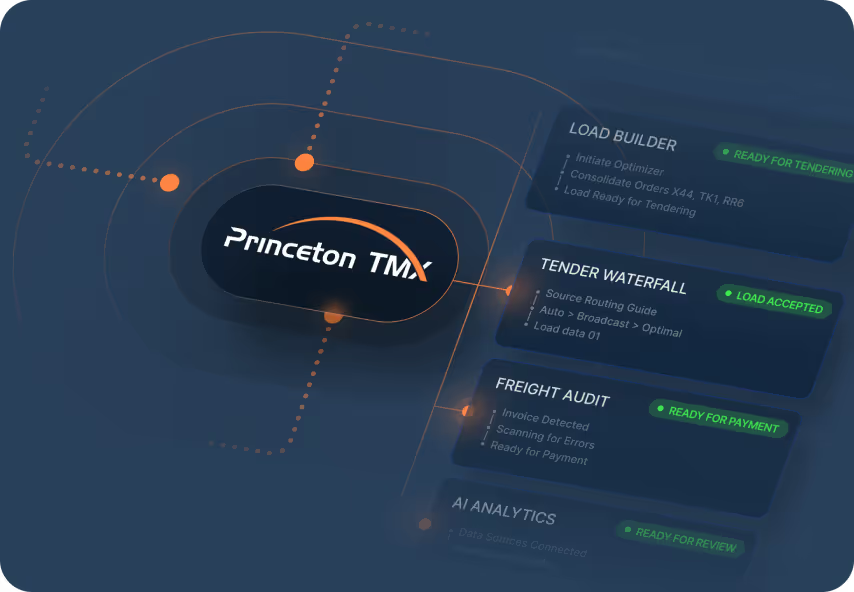
Workflow Automation
Eliminate manual workload and errors with AI and automation that streamline every part of your transportation management process.
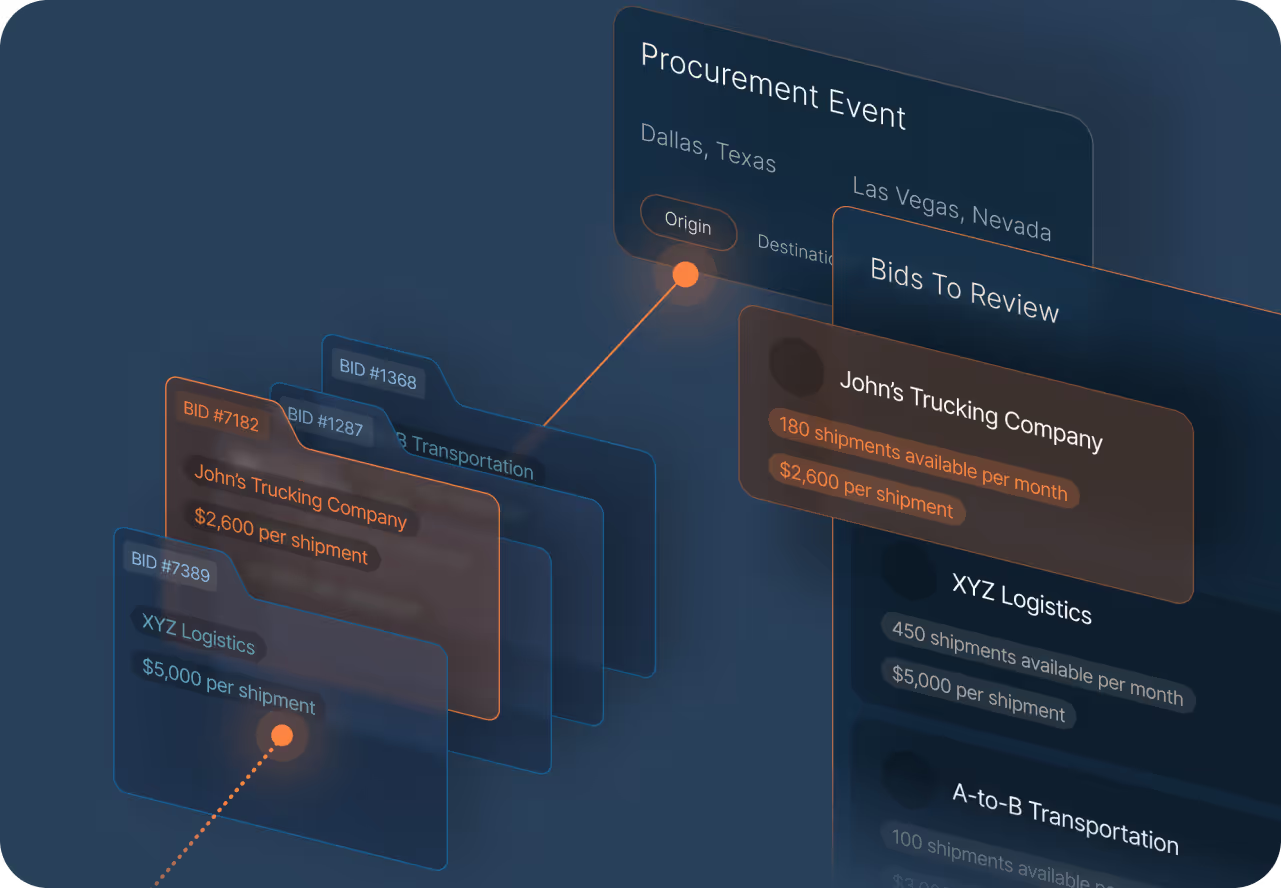
Procurement Events
Secure the best rates and service across every lane by centralizing data, automating communication, and empowering teams with AI-enabled insights.
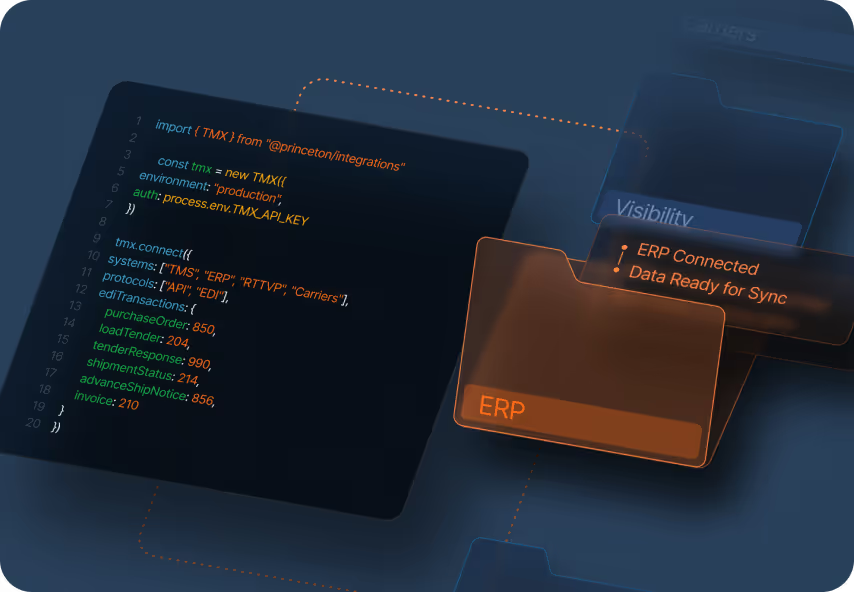
System Integrations
Easily integrate with enterprise resource planning, visibility, procurement, benchmarking, carrier systems, and more, enabling a single source of execution for your transportation teams.
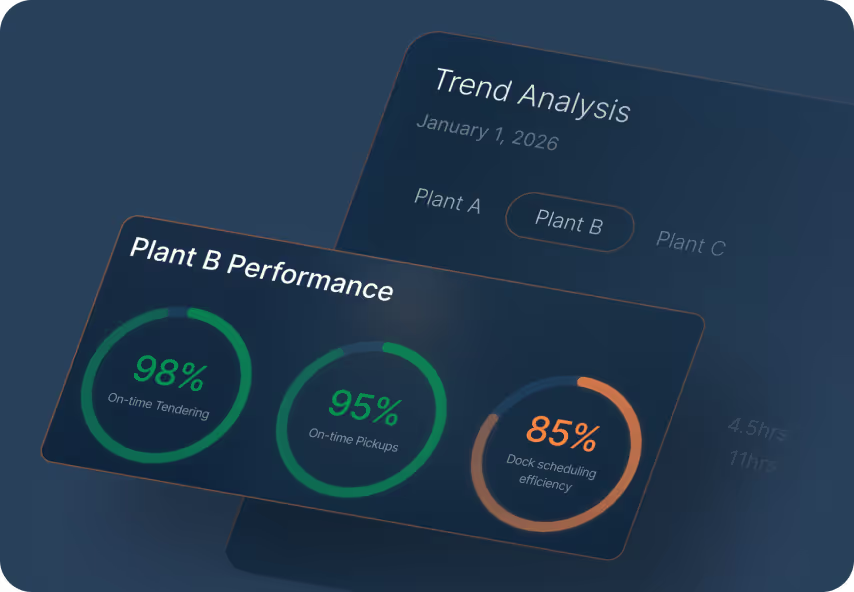
Origin & Plant Performance
Gain clear, data-driven visibility into how each origin, plant, and location operates, helping you optimize origin behavior for both cost and service improvements.
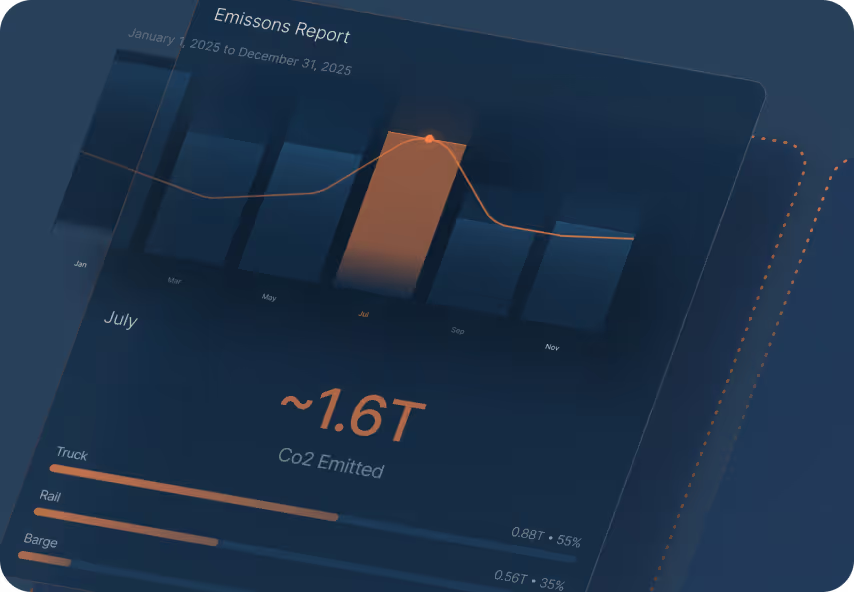
Sustainability Reporting
Meet increasingly complex regulatory and customer expectations by surfacing audit-ready sustainability insights.
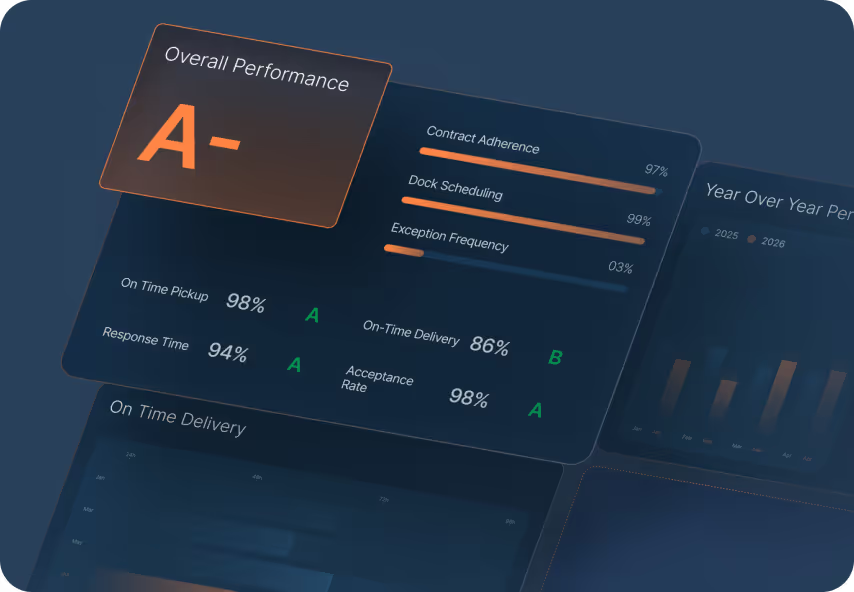
Carrier Performance
Unlock objective, real-time insights into how every carrier performs across cost, service, capacity, and compliance, empowering stronger partnerships and higher reliability.
Transportation Spend Management FAQs
Transportation spend management is the process of tracking and controlling freight costs across every lane, mode, and carrier in your network, giving teams one accurate view of spend instead of fragmented data.
Freight audit catches billing errors on individual invoices. Transportation cost management looks at spend trends across lanes and carriers over time, so you can act on patterns, not just individual mistakes.
Contracted rates, accessorial charges, mode-specific costs, and lane-level spend all feed into transportation spend management. Princeton TMX consolidates this data automatically from every carrier, mode, and location, so your team is working from one normalized dataset instead of reconciling numbers across spreadsheets and disconnected tools.
Transportation teams use it to compare carriers within a lane, spot cost anomalies, and identify consolidation opportunities. Finance teams use the same data to track spend against budget, forecast cost variance, and plan with fewer surprises. Because both teams pull from the same source, there is no reconciling two versions of the truth.
It surfaces high-cost, low-performance lanes and unexpected cost variances, like accessorials or non-compliant charges, as they happen instead of weeks later on an invoice. That visibility lets teams act on consolidation and mode-shift opportunities before overspending compounds across the network.