.avif)
The Importance of Transportation Management in a Supply Chain
The term “supply chain disruption” has become too common. Both suppliers and customers often have to wait to receive materials and goods as planned. So, they have to delay their projects which, in turn, delays other projects along the supply chain.
The constant, fluid movement of materials and product – from one point to the next – keeps a supply chain functioning.
Transportation management, then, plays a critical role for companies seeking to create a resilient, agile, and sustainable supply chain.
What Is Transportation Management?
Transportation management in logistics is the planning, execution, and oversight of how goods move from origin to destination across a supply chain. It covers everything from selecting the right carrier and mode to tracking a shipment in transit and reconciling the final invoice. For companies moving freight across truck, rail, barge, or intermodal networks, transportation management is what keeps that movement efficient, visible, and cost-controlled.
Supply chain disruption has become a constant rather than an exception. Fuel price volatility, carrier capacity constraints, and shifting customer expectations all put pressure on how goods move. Strong transportation management is what allows a business to absorb that pressure without delaying the projects and deliveries that depend on it.
Key Functions of Transportation Management
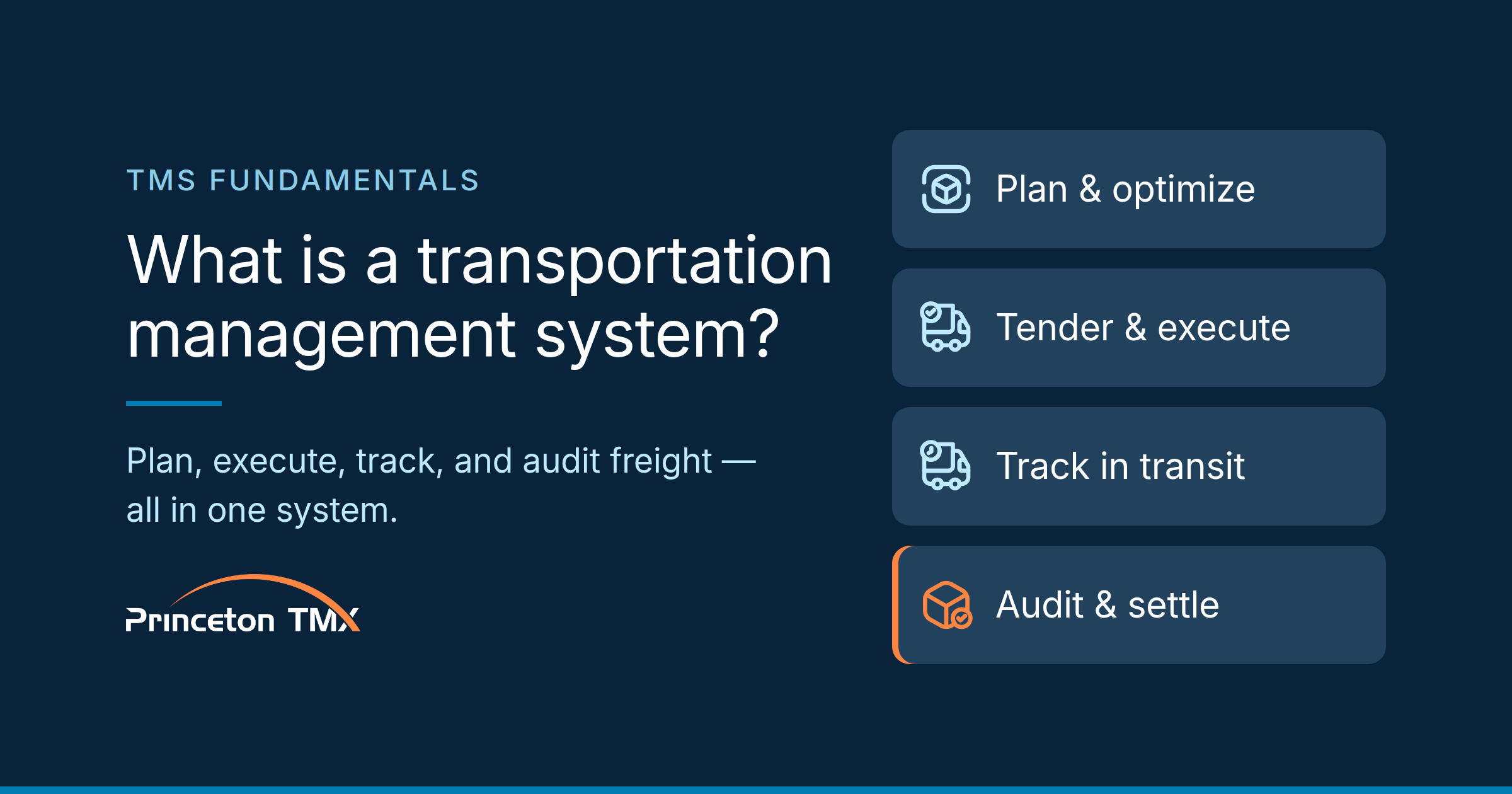
Transportation management covers four core functions, each building on the last.
- Planning and Optimization: This is where loads get built, modes get selected, and routes get chosen. Good planning weighs cost, transit time, and carrier capacity before a shipment ever moves.
- Execution and Carrier Management: Once a plan is set, execution covers tendering loads to carriers, managing accept and decline responses, and coordinating pickup and delivery windows.
- Visibility and Tracking: Shippers need to know where freight is at every stage. Real-time visibility lets teams respond to delays before they cascade into missed deliveries or unhappy customers.
- Settlement and Freight Audit: The final function closes the loop. Invoices get matched against contracted rates, discrepancies get flagged, and accurate cost data flows back into future planning decisions.
A transportation management system (TMS) like Princeton TMX brings all four functions into a single platform, so teams aren't stitching together spreadsheets, carrier portals, and email threads to get a complete picture of their freight operations.
Benefits of Transportation Management in Supply Chain Management
Here are seven benefits that highlight the role transportation management systems (TMSs) play when they are integrated with other supply chain management systems:
Reduced Costs
Because transportation can represent over half of a supply chain’s operational budget, reducing costs is one of the main reason for investing in a transportation management system (TMS).
When it comes to managing transportation costs, shippers have to deal with many challenges, including:
- Rising fuel costs —Volatility in fuel prices means shippers must further optimize loads and routes to remain profitable.
- Carrier capacity—Shippers need to build reputations as “shippers of choice” with their preferred carriers. They are then first in line with carriers who may have limited capacity due to a small fleet, driver shortages, and consolidation through mergers and acquisitions.
Ability to Overcome Geographical Barriers
A supply chain has many physical locations, even around the world. Transportation management makes it possible to overcome these geographical barriers by optimizing loads by transportation mode, such as truck load, less than truckload, and rail.
Increased Supply Chain Visibility
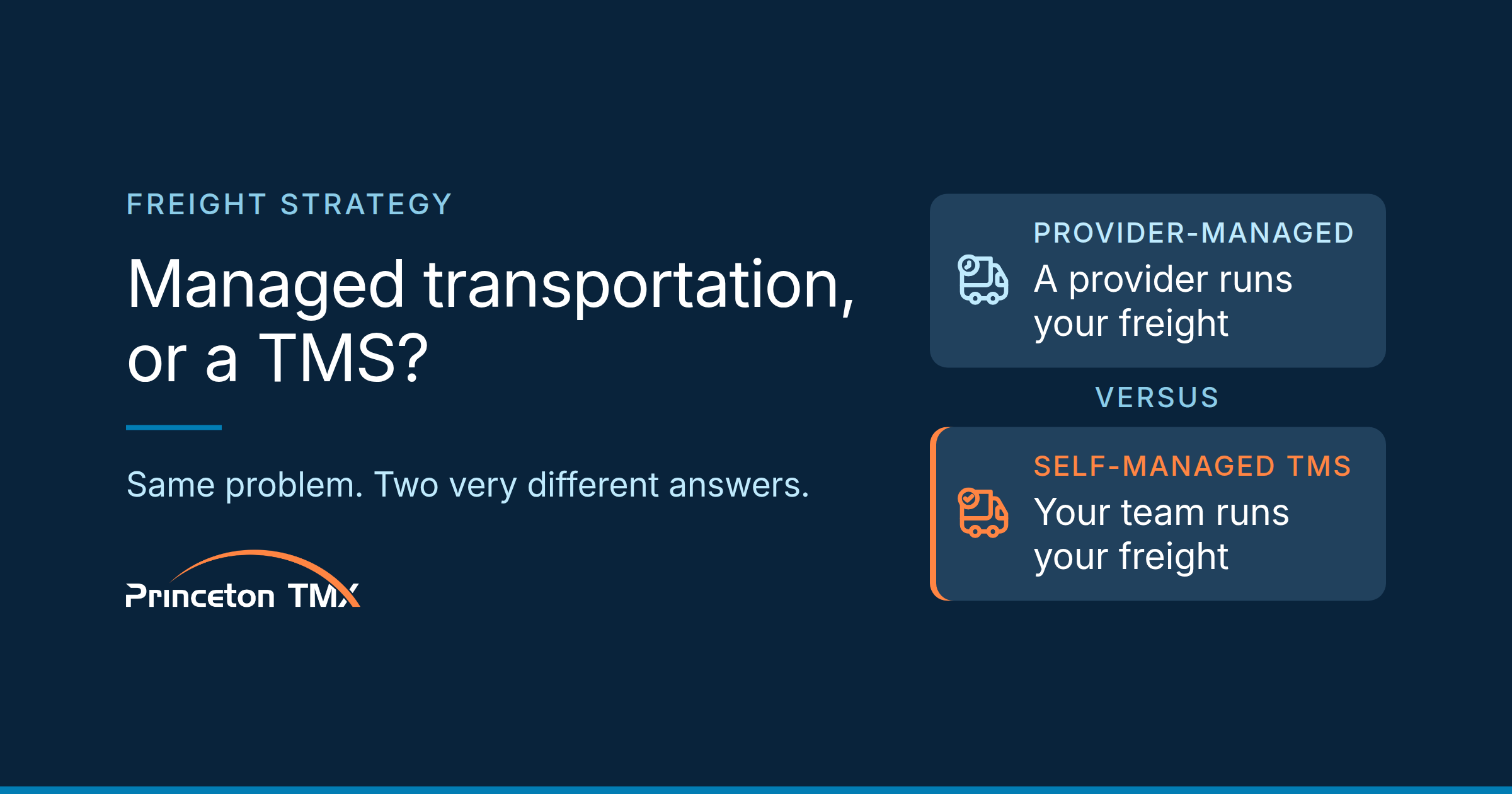
Resiliency and agility requires a level of supply chain visibility only available to transportation managers using the best web-based TMS software. Transportation managers need to know where their freight is at all times. That visibility is also a central factor in the debate between a self-managed TMS and managed transportation: one gives your team direct access to the data; the other routes that visibility through a third-party provider. A TMS that integrates well with a company’s enterprise resource planning (ERP) system and other systems gives them this view deep into the supply chain network. It also allows them to make changes when necessary due to changing conditions caused by weather or traffic.
Ability to Segment Shipments Based on Priority
Not all materials and goods need to be shipped at the same time and the same rate. So, shippers can use a transportation management system to segment cargo and prioritize the order in which they ship items within the supply chain.
Minimized Risk
The many moving parts of a supply chain means it’s easy for changing conditions to disrupt the timely distribution of materials and products. A transportation management minimizes the risk involved in managing a supply chain by increasing the likelihood of on-time pickup and delivery.
Increased Customer Satisfaction
Customer service levels increase when shippers match demand with on-time delivery of goods.
Transportation management contributes to improved customer satisfaction in the following ways:
- Develops long-lasting relationships with preferred carriers
- Allows for a long enough lead time to fully optimize loads and routes
- Creates flexibility when scheduling pickup and delivery windows
Create & Maintain Sustainable Supply Chains
Companies want to engage in sustainable practices to benefit their triple bottom line – profits, people, planet. This means they need to reduce waste wherever possible. Transportation management software allows them to substantially cut waste from carbon emissions. The result of doing this is that they also increase fuel efficiency and cut costs while building goodwill with the people they serve.
How Princeton TMX Supports Transportation Management
Princeton TMX brings planning, execution, visibility, and settlement into one platform built for industrial shippers managing truck, rail, barge, and intermodal freight. Instead of piecing together data from carrier portals and spreadsheets, transportation teams get one connected view of their entire network, along with the AI-driven analytics needed to act on it.
Ready to see what unified transportation management looks like for your business? Book a demo with Princeton TMX today.
Transportation Management FAQs
Transportation management is the planning, execution, and oversight of how goods move across a supply chain, covering everything from carrier selection to invoice reconciliation.
Transportation connects every stage of a supply chain, from raw material sourcing to final delivery. Without reliable transportation management, delays in one part of the network ripple into every part downstream.
A TMS reduces transportation costs, increases shipment visibility, minimizes delivery risk, and improves customer satisfaction by keeping freight moving on schedule.
It reduces costs by optimizing routes and loads, improving carrier negotiating leverage, and catching billing errors before they become sunk costs.
Transportation management focuses specifically on moving freight. Logistics management is the broader function, covering warehousing, inventory, and procurement alongside transportation.