If you handle freight for a manufacturer or industrial shipper, you know the pressure. Tight capacity, rising costs, and higher demands for shipment visibility can overwhelm even the best logistics teams.
A modern Transportation Management System (TMS) connects your network and automates workflows. It also provides insights that lead to real improvements. This system enhances supply chain visibility for all modes of transport.
Modern TMS software allows manufacturers and shippers to plan, execute, and analyze every shipment from one connected platform. It improves shipping processes, enhances transportation plans, and supports smarter data-driven decisions that increase efficiency and control.
This guide explains what a TMS is. It also covers why multimodal capability is important. Finally, it discusses what to think about when choosing the right TMS for your logistics process.
What Is a Transportation Management System?
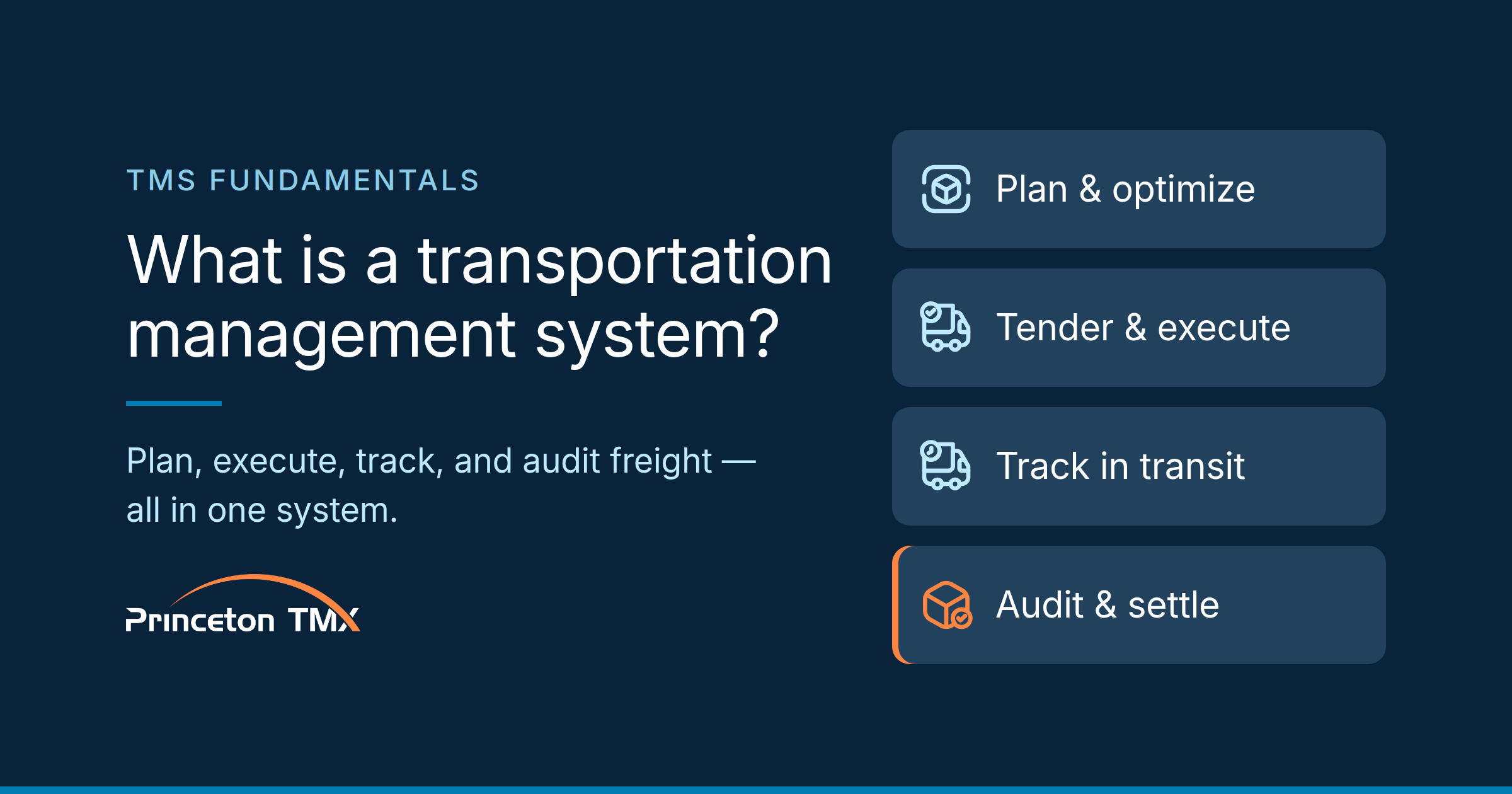
A Transportation Management System is software that helps plan, execute, and measure freight movements in logistics operations. It manages every mode of transport—truckload, LTL, rail, barge, and intermodal. The system handles tasks such as tendering loads, shopping for rates, tracking shipments, auditing invoices, and reporting results.
The best TMS platforms do more than store data. They connect shippers, carriers, and systems in real time to seamlessly integrate daily operations. This connectivity allows decisions and timely updates to flow through the entire network, improving communication and control.
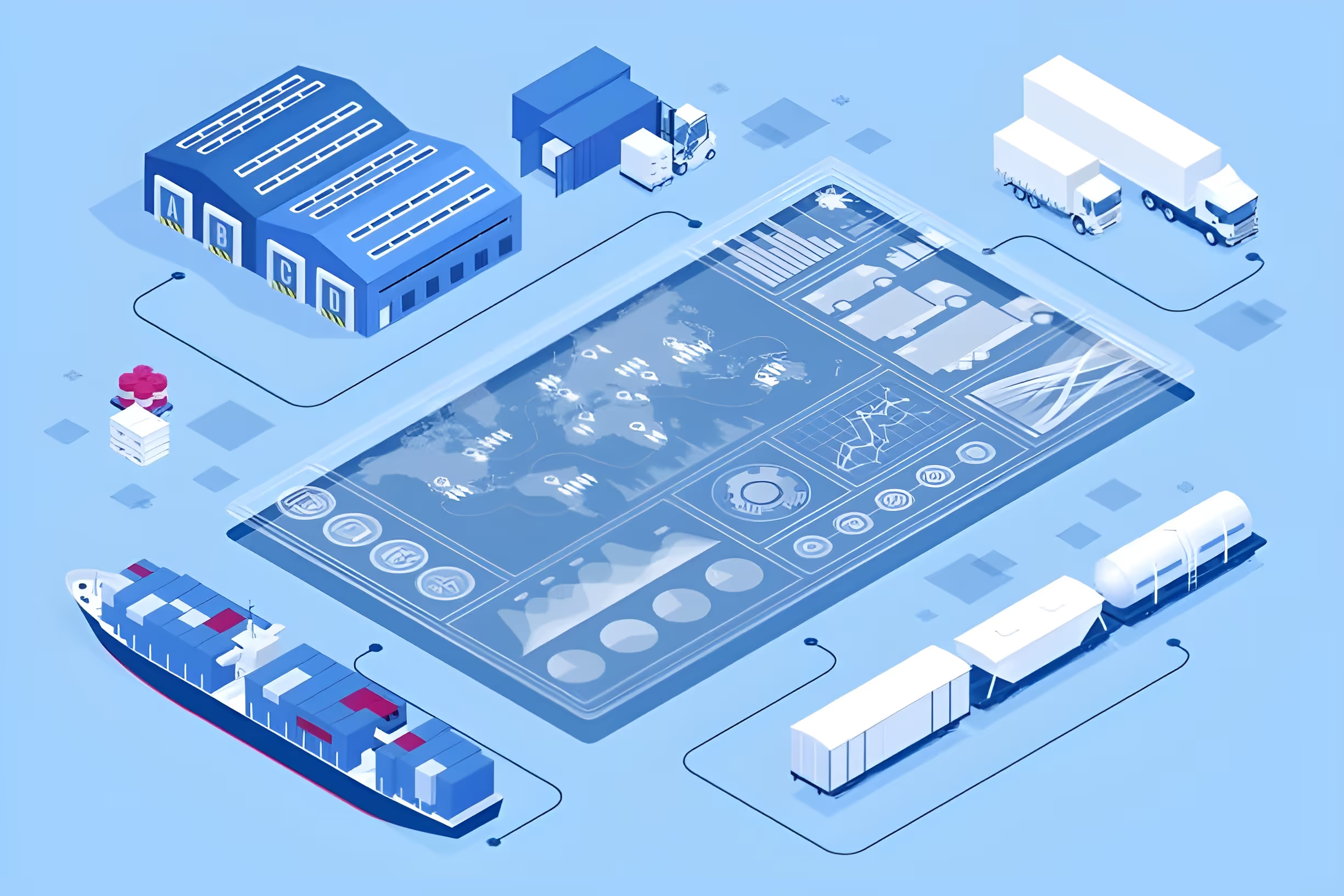
A TMS is a central platform that supports planning, execution, visibility, and financial settlement. It also simplifies order processing and manages the movement of goods through multiple legs of a shipment. By combining all freight modes, it creates a single source of truth for your transportation network.
Many companies use freight management software alongside a TMS to handle contracts and invoices. These tools create the digital backbone of modern transport and logistics. They allow full visibility across the entire supply chain.
Why It Matters for Industrial Shippers
Industrial supply chains face unique challenges: heavy freight, specialized equipment, strict pickup windows, and plant-level delivery requirements. A connected TMS brings every transport and logistics process into one view and helps by:
- Consolidating modes (TL, LTL, rail, barge, and intermodal) in one platform
- Automating execution (rating, tendering, scheduling, exception handling)
- Providing transportation visibility software to monitor shipments and exceptions
- Strengthening cost control with rate governance and audit automation
- Supporting TMS optimization through continuous data insights
Industrial manufacturers especially benefit from TMS software for manufacturers that connects procurement, logistics, and finance teams while automating day-to-day shipping processes.
When evaluating the best TMS software, focus on scalability, usability, and real-time connectivity. The goal is to increase visibility, significantly reduce manual steps, and improve overall processes involved in transportation management.
Core Capabilities to Expect in a Modern TMS
Rating and Procurement
- Centralize tariffs, contracts, and spot-quote workflows.
- Govern accessorials and fuel schedules.
- Compare rates across all modes with consistent business logic.
Multimodal Planning and Optimization
- Optimize mode and carrier selection by cost, service, and constraints.
- Build multi-stop loads and pool distribution where beneficial.
- Respect real-world rules such as trailer type, hazardous freight, and dock hours.
- Optimizing routes in real time helps reduce empty miles and saves time for logistics managers.
Execution: Tendering, Dock, and Yard Management
- API/EDI tenders with carrier accept/decline tracking.
- Appointment scheduling with facilities and carriers.
- Exception workflows for delays, OS&D, reships, or reconsignments.
Shipment Visibility and Event Management
- Real-time tracking through ELDs, mobile apps, and APIs.
- Milestone monitoring (pickup, in-transit, delivered) with timely updates for customers.
- Control-tower dashboards for plants, lanes, and customer orders.
Freight Audit and Payment
- Three-way match (tender → shipment → invoice) to identify variances.
- Automated audit rules for accessorials and fuel.
- Payment readiness files and dispute workflows to shorten cycle time.
Analytics and KPI Reporting
- Role-based dashboards for transportation, plants, and customer service.
- Lane analytics, carrier scorecards, and spend trends.
- Drill-downs to shipment-level detail for continuous improvement and data-driven decision making.
Carrier Performance and Reporting
- Scorecards track on-time performance and rate compliance.
- Embedded analytics capture five years of historical data to support long-term TMS optimization and predictive forecasting.
Case Study: Real-World ROI
One Princeton TMX client, Custom Glass Solutions, achieved a 20× ROI on their TMS investment within six months. They automated previously manual LTL processes, improved transportation plans, and gained real-time updates through better connectivity. This automation helped significantly reduce manual entry while cutting freight costs nearly in half.
Their success shows how a connected TMS not only improves supply chain visibility but also delivers enhanced customer satisfaction. When customers expect faster and more transparent delivery, visibility becomes a competitive advantage.
Why Multimodal Integration Is Non-Negotiable
Many companies still manage modes in silos—one system for truckload, spreadsheets for everything else. That fragmentation hides the true cost of transportation and delays decision-making.
Benefits of one connected, multimodal TMS:
- Unified TMS visibility across TL, LTL, rail, barge, and intermodal
- Consistent business rules across all carriers and modes
- Optimization opportunities that blend modes and reduce emissions
- Easier adoption with one workflow for all users
Unified transportation visibility software lets users monitor shipments, handle exceptions faster, and share accurate ETAs with customers. TMS tracking software provides proactive alerts, ensuring every stakeholder receives timely updates throughout the movement of goods.
Suggested visual: “Multimodal Coverage Chart” — TL, LTL, rail, barge, intermodal, and fleet with checkmarks.
Alt text: “Table showing Princeton TMX TMS capabilities across multimodal transportation.”
Visibility That Moves the Needle
Visibility is about more than dots on a map. Modern systems combine transportation visibility software with predictive analytics to prevent issues before they happen.
A strong TMS helps:
- Identify late inbound materials before they cause production downtime
- Send proactive, timely updates to customers and carriers
- Retain historical telematics data for claims and audits
- Use analytics to pinpoint recurring issues by lane or facility
- Provide logistics managers with real-time tracking for faster resolutions
This insight builds trust with customers. It helps make data-driven decisions that lead to better results and increased customer satisfaction.
Get ongoing market context from TMX Trendwatch insights here.
Practical Automation Wins
Automation should simplify, not complicate. By reducing manual effort, teams can focus on what truly matters—execution and improvement.
Examples of automation that improve shipping processes:
- Smart carrier selection automatically tenders to the best-fit carrier.
- Exception routing alerts the right team instantly.
- Document automation handles BOLs, labels, and customs packets.
- Audit workflows automate processes to match invoices and flag anomalies.
A connected TMS will easily combine these steps. This helps teams reduce touchpoints, optimize routes, and save time.
Building the ROI Case
To demonstrate the benefits of TMS software, you can measure several improvements. These include fewer manual tasks, better on-time performance, and improved carrier compliance.
A connected TMS solution can help:
- Reduce manual work through TMS automation and audit rules
- Lower freight spend by optimizing mode and carrier selection
- Improve service with faster exception resolution
- Shorten cash cycles with accurate billing
- Enable ongoing TMS optimization through analytics and reporting
Organizations comparing TMS software examples often find that multimodal capability and automation correlate directly with cost savings and increasing efficiency. These improvements enhance customer satisfaction, reduce waste, and give logistics managers better control.
Implementation and Adoption: What Good Looks Like
Successful TMS deployment depends on people as much as technology. Follow these best practices:
- Map stakeholders across transportation, finance, and plants.
- Standardize workflows before implementing the system.
- Roll out by phase, starting with one mode or region.
- Manage change and training early to drive adoption.
- Measure performance to sustain momentum.
A strong TMS offering includes training, integration, and data migration support to help shippers realize value quickly. The right platform will work well with your ERP, WMS, and carrier systems. This will create consistency in your logistics process.
Learn more about enabling adoption here.
Future Trends in TMS Technology
TMS technology continues to evolve rapidly:
- AI and machine learning enable predictive ETA alerts and dynamic optimization.
- Cloud platforms enhance scalability and supply chain visibility.
- Sustainability analytics track emissions and route efficiency.
- TMS tracking software powered by IoT provides real-time updates for every shipment.
- Automation continues to significantly reduce human error and manual data entry.
Future solutions aim to automate order processing. They will optimize routes and make the movement of goods smoother. These advancements help logistics managers build smarter networks that perform better and deliver what customers expect.
Conclusion
If you are a shipper or manufacturer, using connected TMS software can help. It improves supply chain visibility, shipping processes, and decision-making. It provides the foundation for increasing efficiency, automation, and long-term cost savings.
Explore how Princeton TMX helps industrial shippers seamlessly integrate multimodal networks, automate workflows, and achieve continuous TMS optimization.
Learn more: